
Pembayaran Gadai
From a paper slip and a trip to the branch, to a pawn you can track and pay from your phone
- Company
- Phintraco Consulting
- Platform
- Mobile app
- Project
- Natha Gadai
- Year
- 2026
The Beginning
A pawn is a loan with a clock on it. Once the money is in hand, three things matter: when it is due, how much is owed, and what happens to the item if the date is missed. In a traditional pawnshop, those answers live on a paper slip and at the counter.
For customers in the suburbs and regencies, getting an answer can mean another long ride. It was one of the gaps we found in other pawn apps: paying still meant going back to the branch. So Natha Gadai has two jobs: show where every pawn stands, and let the customer act on it from the phone.
Two questions, every day
Where does my pawn stand, and what can I do about it today?
Behind those two questions are four smaller ones.
- 01
How long do I have?
A due date that turns into days left, with a colour for urgency.
- 02
How much do I owe?
The loan, the fine and the fees, before anything is paid.
- 03
What can I do about it?
Pay it all, pay a part, or buy one more month.
- 04
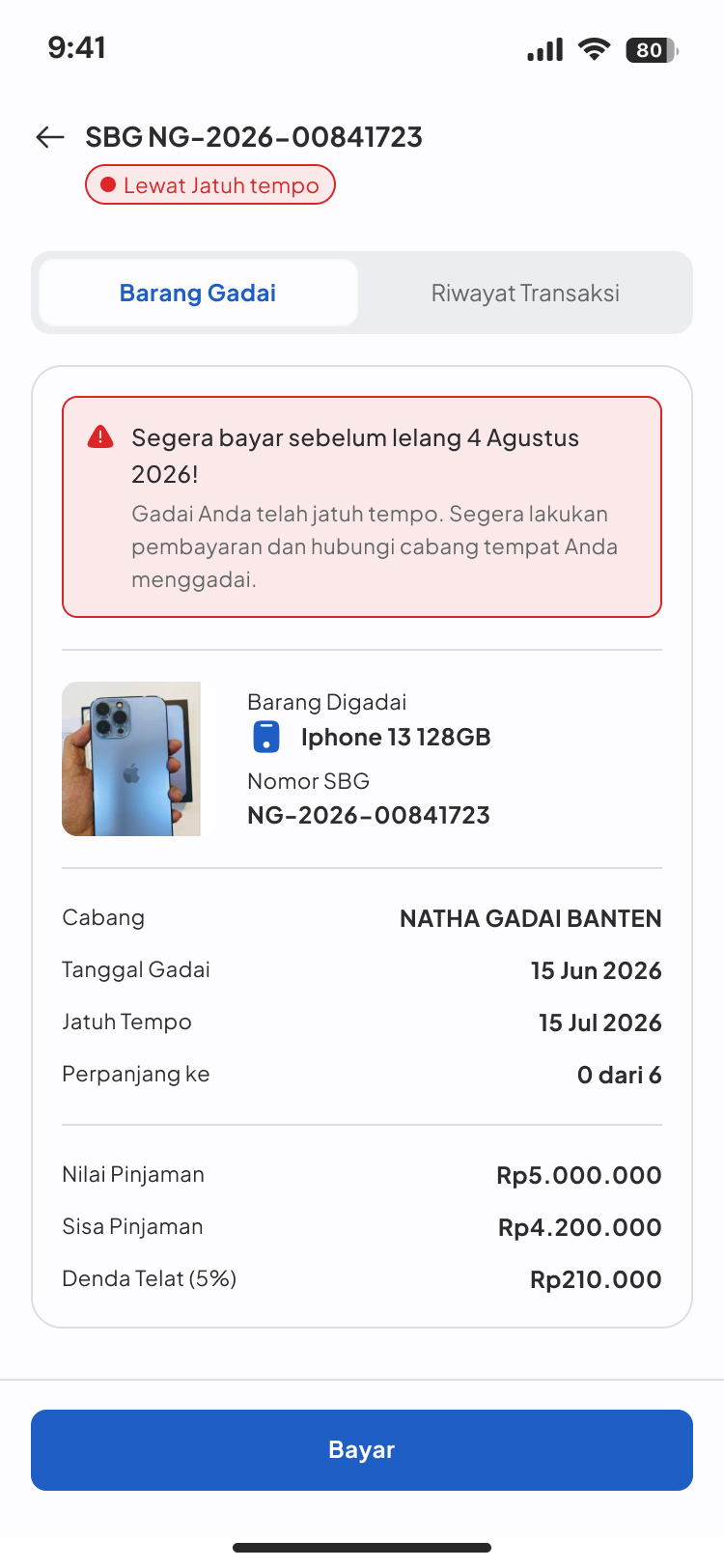
What if I am late?
A fine, a clear deadline, and fewer options.
So the design question became
How do we make a debt with a deadline feel manageable?
The Journey
The solution
Natha Gadai turns each pawn into a card with a status, a countdown and one next action. From that card the customer can pay in three ways, all through the same short flow. We worked on it in two parts: tracking first, then paying.
The unique value
A pawn that always tells you what to do next.
Part one: tracking
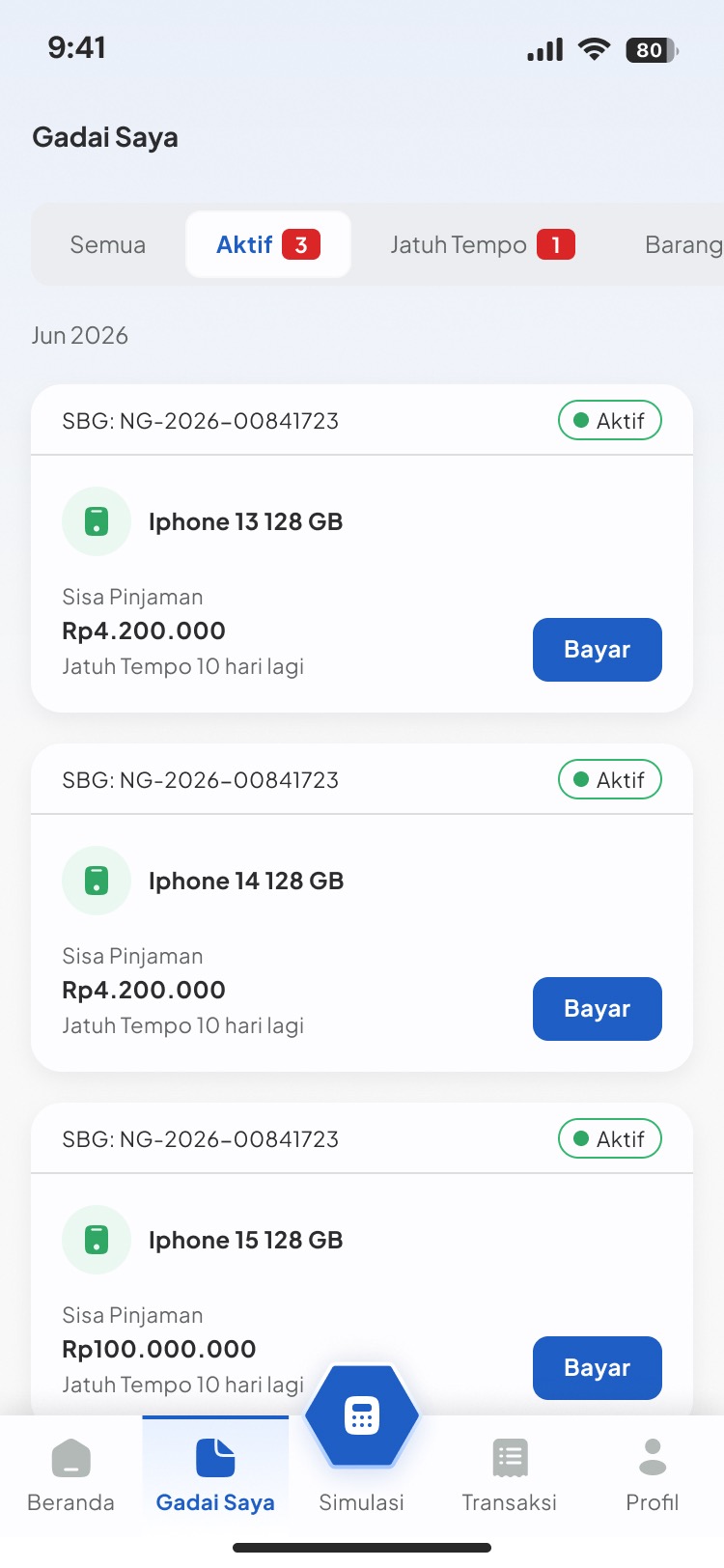
Status first
Tabs sort pawns by status and count what needs attention: Aktif, Jatuh Tempo, Barang perlu diambil and Selesai. Customers see what needs them before they read a single number.
A status on every card
Each pawn shows its status, its remaining balance and how many days are left. One look answers “how long do I have?”
One next action
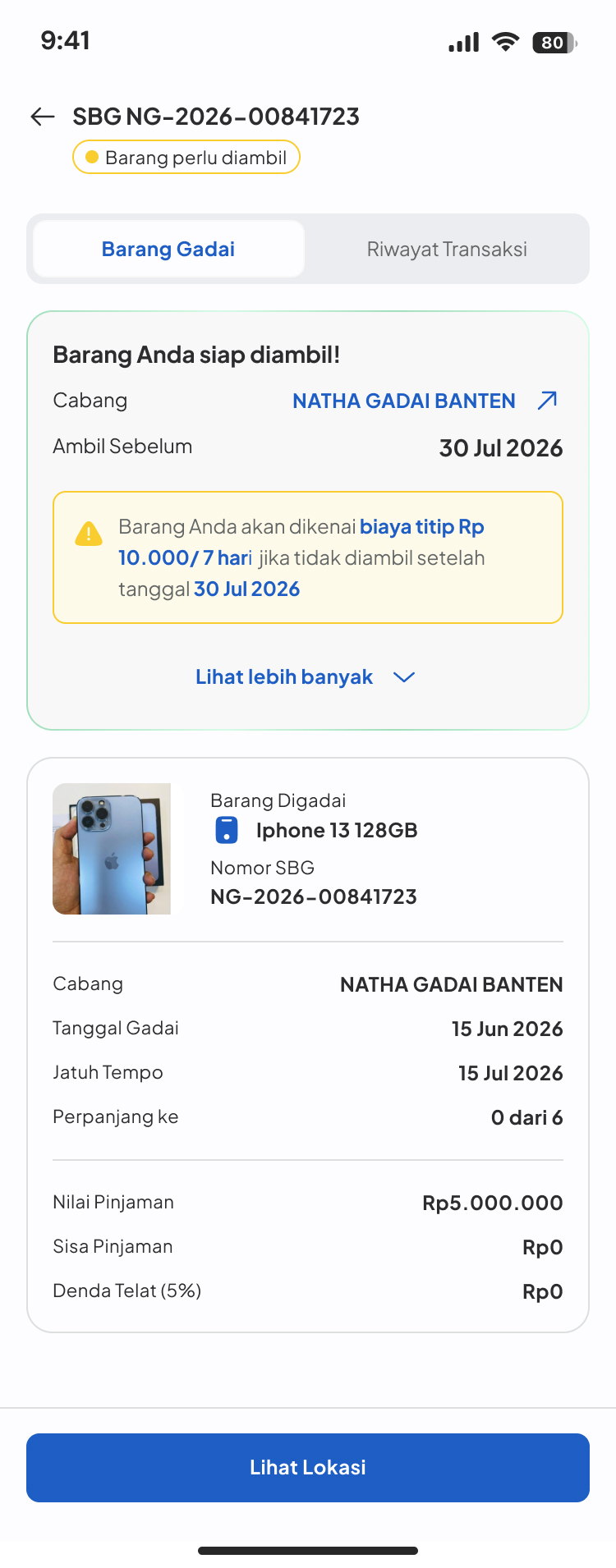
The button follows the status: Bayar while the pawn is active, Lihat Lokasi when the item is ready, Gadai Lagi when it is finished. The card always says what to do next.
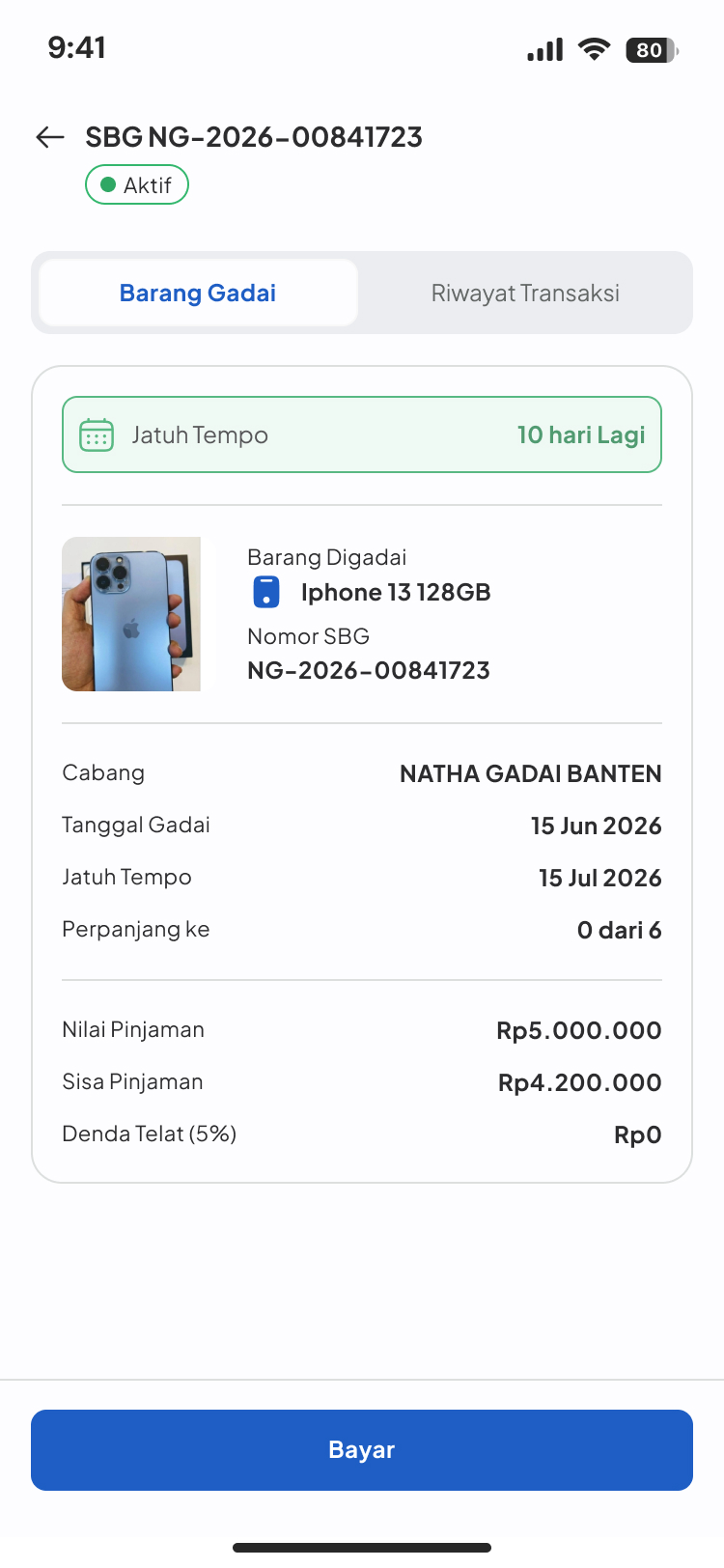
Four statuses, four jobs
Open a pawn and the screen changes with its status, so each one can say the thing that matters most.
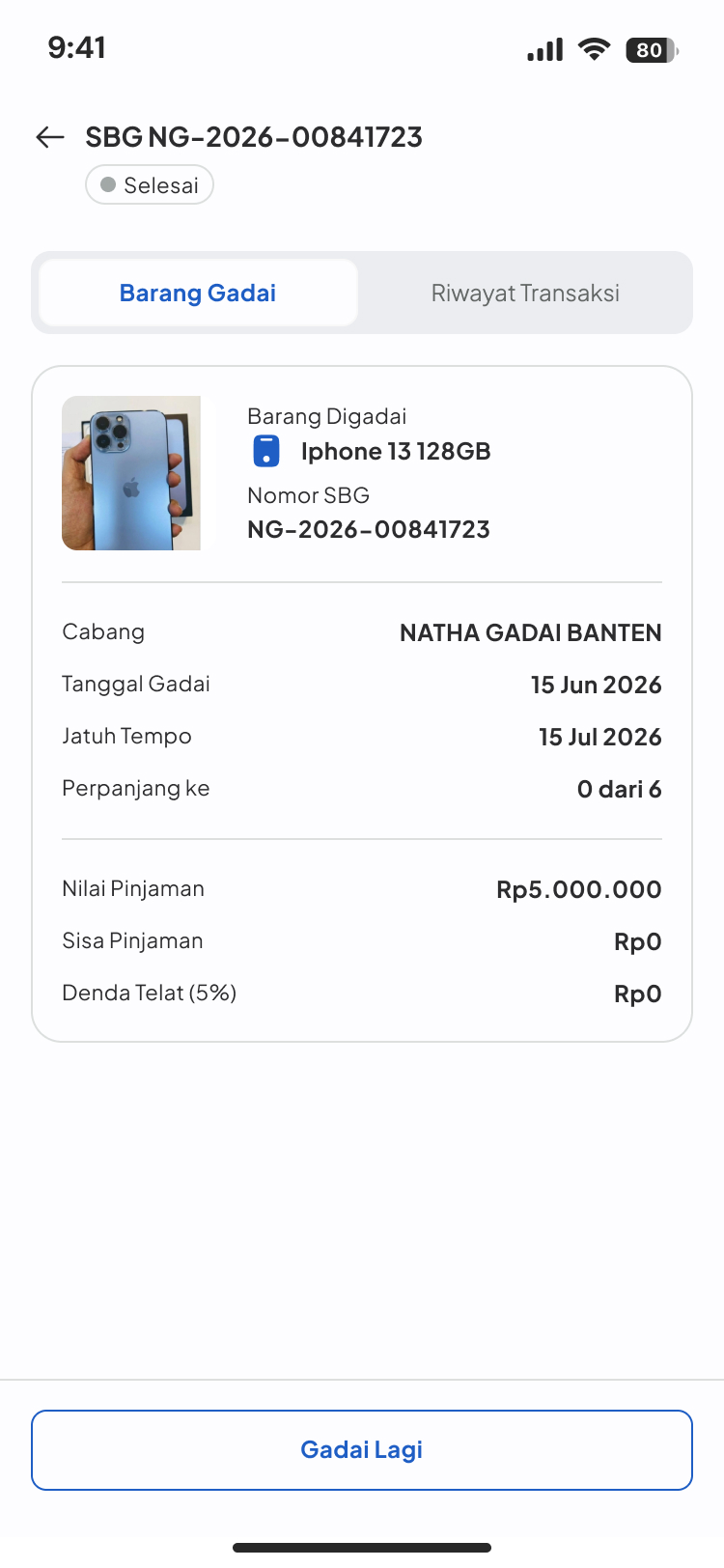
Part two: paying
Every active or late pawn has a Bayar button, and it opens the same first choice: three types of payment, each for a different intention.
| Tebus LunasPay it all, take the item back. | Bayar CicilanPay a part, lighten the loan. | PerpanjangBuy one more month. | |
|---|---|---|---|
| You pay | The whole remaining loan, plus any fine. | An amount you choose, within a range shown under the field. | A service fee of 10% for 30 days, plus a fine if late. |
| What happens | The item is ready to collect at the branch. | The balance drops. The due date stays. | The due date moves a month, up to 6 times. |
| The rule | Always available, even when late. | Only while the pawn is active. | Electronics must add an instalment. For other items it is optional. |
Whichever type is chosen, the flow keeps the same four steps, so customers only have to learn it once.
- 1
Review the bill
The numbers, the pawn, and one tick to agree.
- 2
Pick a method
E-wallet, QRIS or a virtual account.
- 3
Pay in time
A countdown, the total and a number to copy.
- 4
See what changed
The new balance, or what to bring.
the same rhythm for every type
The Design
Every journey below plays by itself, straight from the final screens. When one journey ends, the next begins. Pick a journey to watch it, pause to look closer, or jump to any step.
The Ending
In the end, a pawn stopped being a slip of paper and a trip.
A customer can now see where each pawn stands, what it costs to settle, part-pay or extend it, and what happens if the date is missed, all before leaving home. The one trip left is the one that matters: taking the item back.
Without Natha Gadai
With Natha Gadai
The status
A paper slip, read at the counter
→
A card with a status and a countdown
Paying
A trip back to the branch
→
Three payment types, from the phone
Being late
A surprise at the counter
→
A fine explained, and a deadline in red
A debt feels lighter when you can see its edges.